 Robert Russell Designs
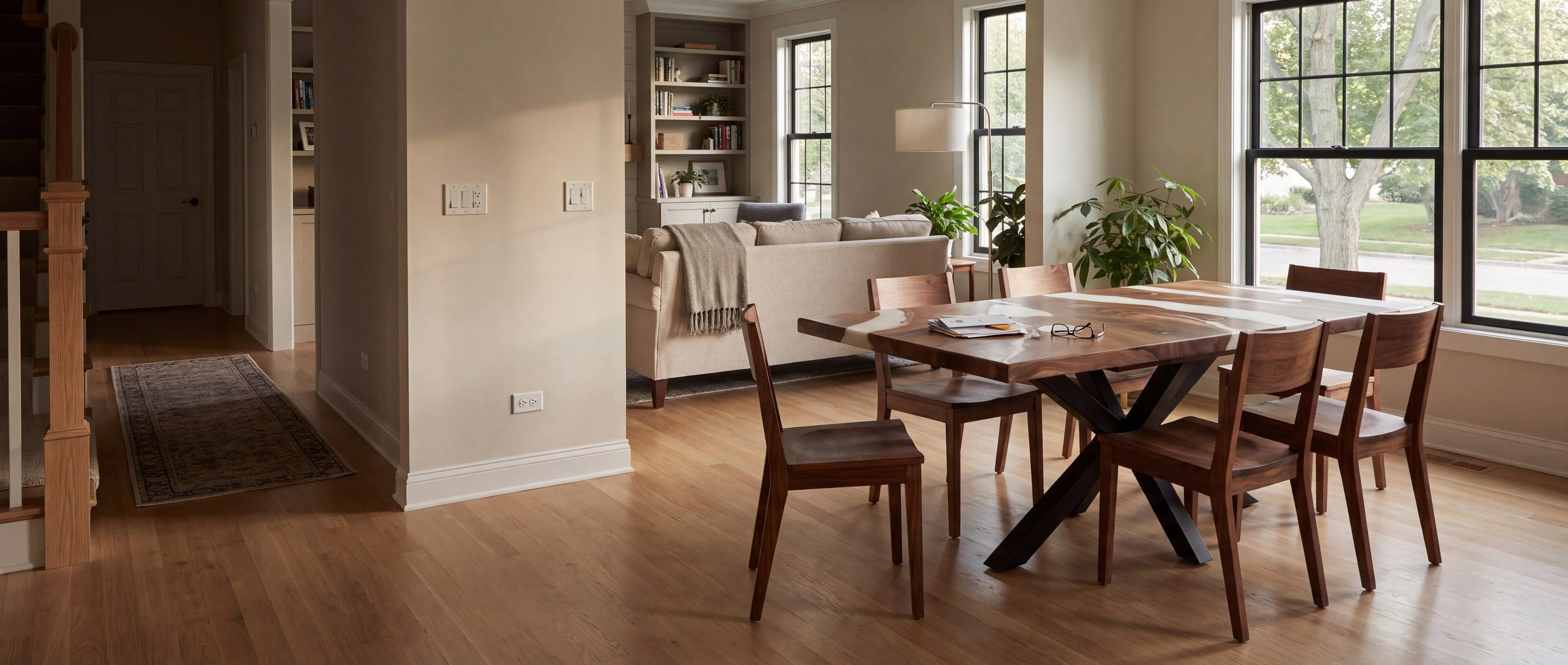
Shown in a rendered room
Custom epoxy tables vs mass-produced
Learn the real difference between true custom epoxy tables and mass-produced resin tables. Discover how to spot fake "custom" tables, understand lead times, and avoid costly mistakes before you buy.
Buying a Custom Table ·
Custom Epoxy Tables vs Mass-Produced Resin Tables: What Buyers Need to Know
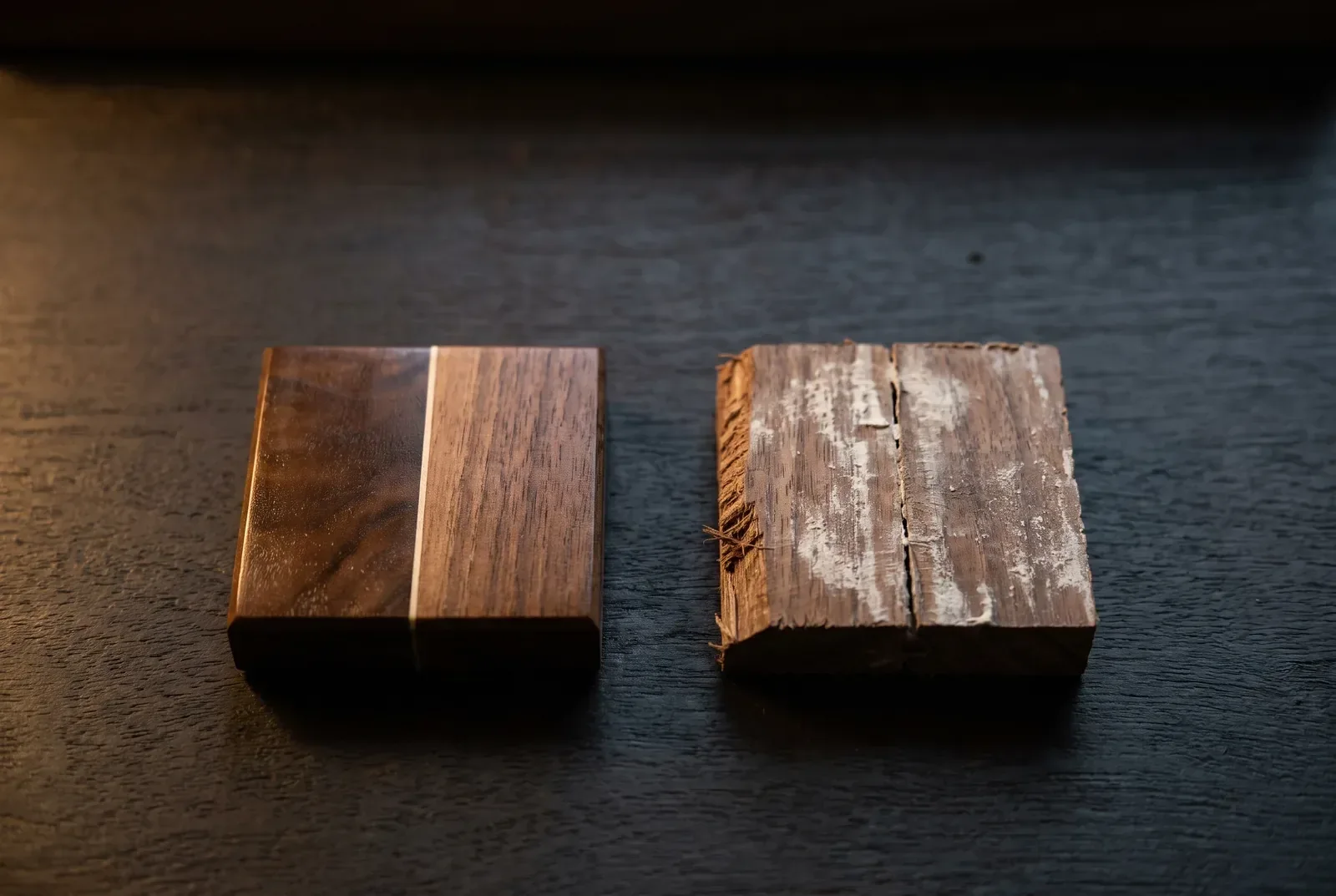
A side-by-side comparison showing the difference between a true custom epoxy table and a mass-produced resin table.
Epoxy resin tables have exploded in popularity over the last few years. Scroll Instagram or Pinterest and you’ll see dramatic river tables, bold colors, and figured wood slabs everywhere. But behind the photos, not all epoxy tables are created the same, and the difference matters far more than most buyers realize. This guide is designed to help you understand how epoxy tables are actually made, why prices vary so widely, and how to tell the difference between a true custom epoxy table and a mass-produced or imported alternative.
What Does “Custom Epoxy Table” Really Mean?
The word custom is used loosely in the furniture industry. In practice, epoxy tables usually fall into two very different categories.
1. Configured or Pre-Made Epoxy Tables
These tables are typically:
-
Produced in batches
-
Often made overseas or by third-party manufacturers
-
Listed as “in stock” or shipped in days
-
Marketed as “custom” because buyers can select size or epoxy color
While some look appealing online, the build process is standardized, not bespoke.
2. True Custom, Made-to-Order Epoxy Tables
A genuine custom epoxy table is:
-
Designed and built from raw wood slabs
-
Started after the order is placed
-
Sized, proportioned, and engineered for one specific space
-
Built start-to-finish by the same studio
This process takes time, but it produces a fundamentally different result. You can see completed custom epoxy tables here: custom dining tables I’ve built. And follow real, behind-the-scenes builds on Instagram, like Fastest Glue Up of a Solid Walnut Round Dining Table Top.
Why Do Some Epoxy Tables Ship in 7 Days While Others Take Weeks?
Short lead times often indicate rushed or pre-made epoxy tables, while longer timelines typically reflect true custom craftsmanship. This is one of the biggest red flags buyers overlook. Short lead times almost always indicate pre-made inventory. True custom epoxy work requires:
-
Careful slab selection and acclimation
-
Flattening, joinery, and reinforcement
-
Controlled epoxy pours and cure cycles
-
Multiple sanding and finishing stages
-
Structural base fabrication and final assembly
Rushing these steps compromises durability and long-term stability. I document this whole process: full build videos on YouTube, like How to Make a Semi-Transparent Glowing Epoxy Waterfall Table, and progress shots and finished installs on Instagram.
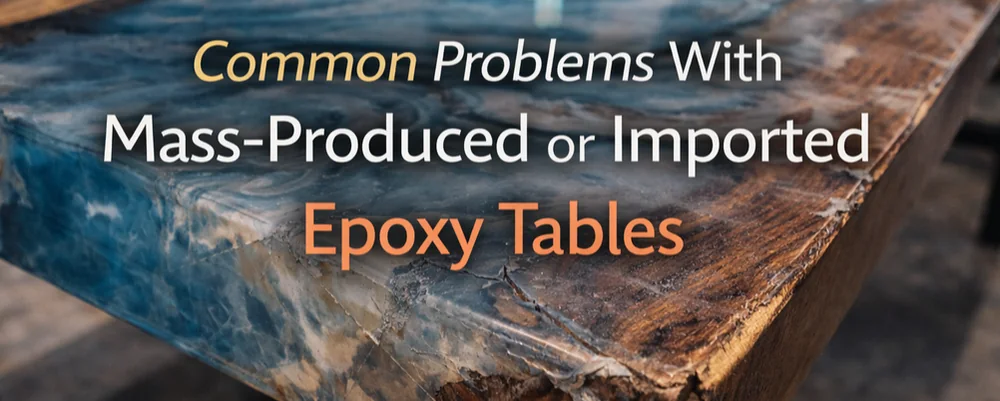
Common Problems With Mass-Produced or Imported Epoxy Tables
Close-up of a damaged epoxy resin table illustrating common problems found in mass-produced or imported epoxy tables, including cracking, delamination, uneven curing, and finish failure caused by shortcuts in materials and construction.
Without naming companies, here are issues buyers frequently encounter:
Inconsistent Wood Quality
-
Mixed or unidentified wood species
-
Wood not fully dried or stabilized
-
Glue seams hidden under opaque epoxy
Structural Shortcuts
-
Thin slabs laminated to particle board or MDF
-
Epoxy used decoratively rather than structurally
-
Undersized bases and insufficient reinforcement
Cosmetic-First Finishes
-
Thick, high-gloss coatings that scratch easily
-
Minimal sanding stages
-
Premature finish failure
Limited Accountability
-
No long-term warranty
-
No direct contact with the actual builder
-
Difficult post-delivery support
These problems rarely appear in product photos. They show up months or years later.
What Sets a True Custom Epoxy Table Apart?
A properly built epoxy table prioritizes engineering first, aesthetics second. Key characteristics include:
-
Solid hardwood slabs selected for stability
-
Epoxy integrated structurally, not just visually
-
Balanced proportions and correct base geometry
-
Multi-stage sanding and durable finishing systems
-
A documented build process
You can see these steps happening in real time here:
How I Work
Every table I build starts with a conversation about the room and how it will be used. Each one is:
-
Designed for the client’s specific space and use
-
Built from raw hardwood slabs in my shop
-
Poured, sanded, and finished in-house
-
Engineered for daily life, not trends
-
Designed and led by me, so you deal with the person building it from the first call to the installation
What Real Customers Say
One of the biggest differences between true custom studios and mass-market sellers is accountability. You can read verified customer feedback here:
These reviews reflect real projects, real timelines, and real outcomes, not anonymous marketplace transactions.
Frequently Asked Questions (FAQ)
Are epoxy tables made overseas lower quality? Not automatically, but many imported tables prioritize appearance and price over structure and longevity. The biggest issue is lack of transparency around materials and construction.
Why are some “custom” epoxy tables so much cheaper? Lower prices usually come from:
-
Batch production
-
Thinner wood
-
Lower-grade epoxy
-
Faster finishing processes
-
Reduced labor time
True custom work costs more because it requires time, skill, and accountability.
How can I tell if an epoxy table is really custom? Ask:
-
Was the table built after I ordered it?
-
Can I see real photos or videos of the build?
-
Who actually poured and finished the table?
You can see what real transparency looks like here: my builds on Instagram and my build videos on YouTube.
Is epoxy durable enough for daily use? Yes, when executed correctly. Poor epoxy work scratches, clouds, and fails prematurely. Proper curing, sanding, and finishing make all the difference.
Final Thoughts: Buy the Process, Not Just the Table
The biggest mistake buyers make is shopping epoxy tables like décor instead of furniture. A true custom epoxy table should:
-
Last decades, not seasons
-
Age gracefully
-
Be built by people you can talk to before and after delivery
If you want to see how a real custom epoxy table is made from raw slab to finished piece, start here: