 Robert Russell Designs
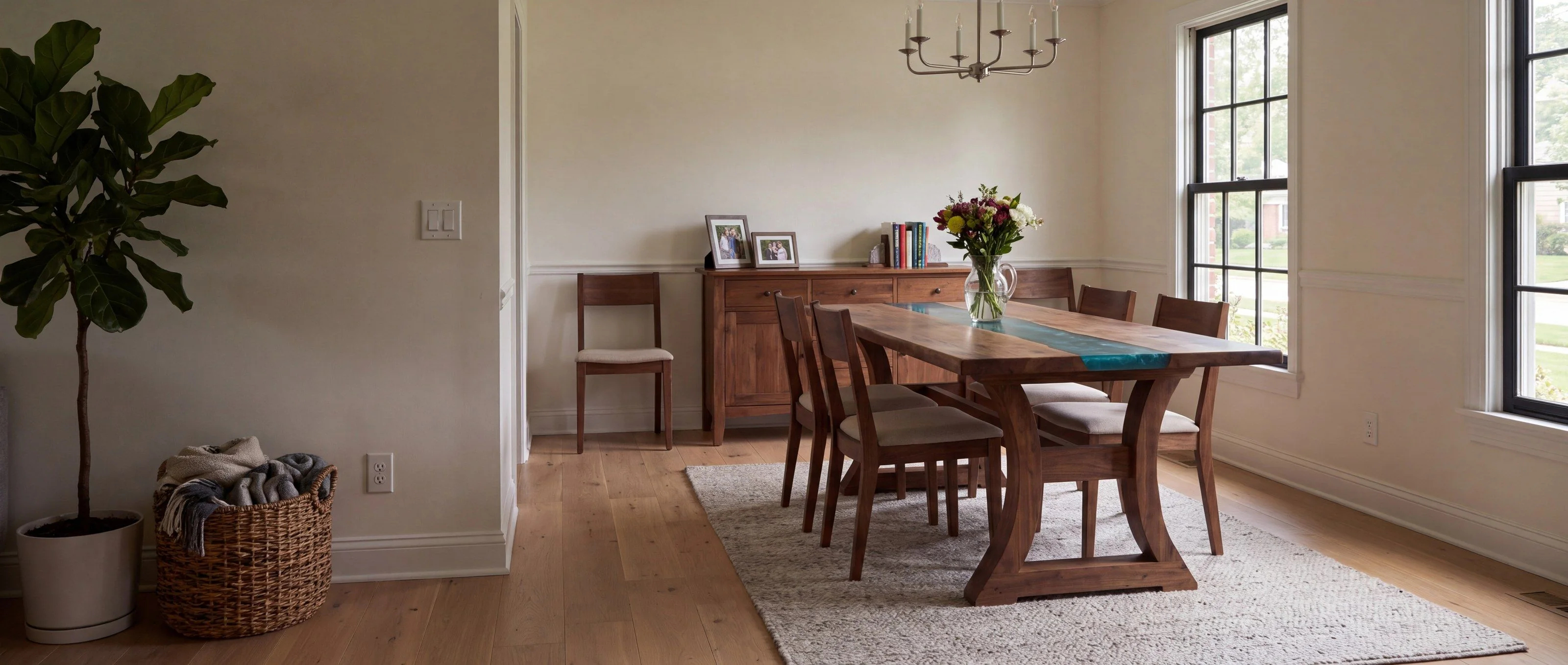
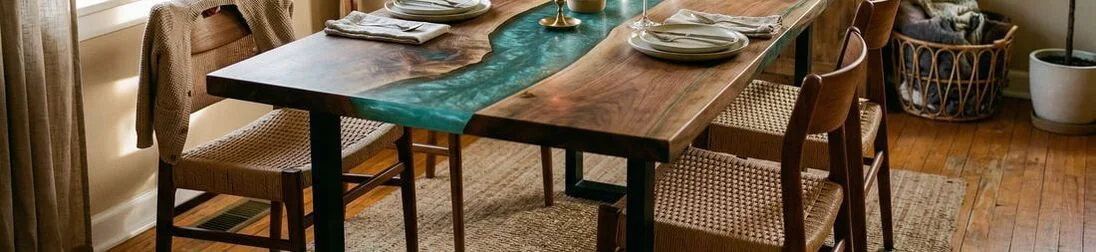
Shown in a rendered room
Walnut vs Elm vs Maple for Epoxy Dining Tables
Compare walnut, elm, and maple to find the best wood for your custom epoxy dining table. Learn durability, style, and design differences from Robert Russell Designs.
Materials & Wood ·
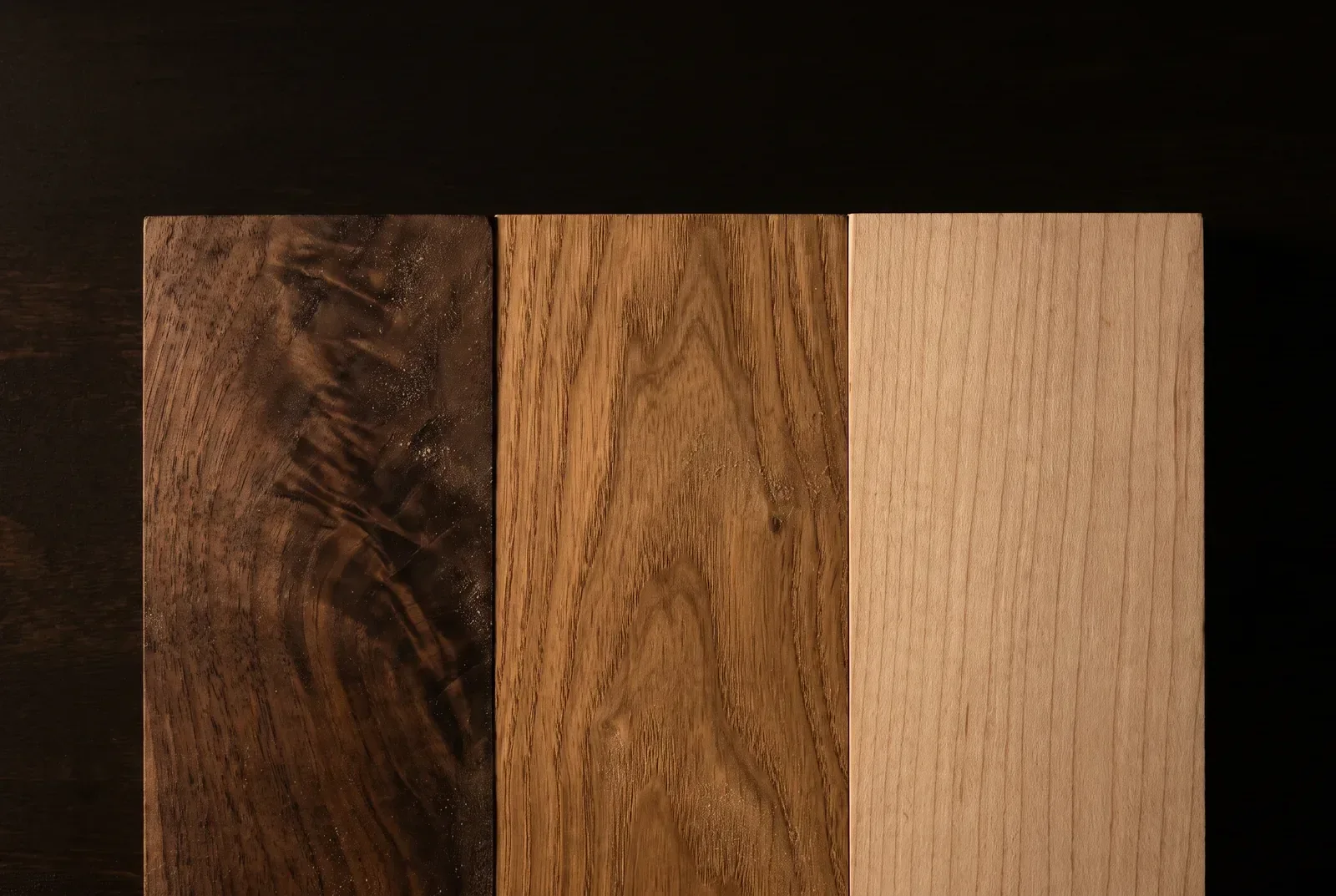
Best Wood for Epoxy Dining Tables (Walnut vs Elm vs Maple)
Choosing the right wood is one of the most important decisions when designing a custom epoxy dining table. While epoxy often gets the attention, it’s the wood that defines the character, durability, and long-term performance of the table. Every custom epoxy resin dining table I build starts with the slabs, and we choose them together.
Not all wood species perform the same, and choosing the wrong one can affect everything from appearance to stability over time. In this guide, I’ll break down the three most popular choices for a wood epoxy dining table: walnut, elm, and maple, and help you decide which is right for your space.
Why Wood Selection Matters in an Epoxy Dining Table
A high-quality epoxy dining table isn’t just about looks. It’s about how materials work together. Wood impacts:
-
Stability and movement over time
-
How epoxy bonds and behaves
-
Overall durability for daily use
-
The visual tone of the finished piece
According to the Wood Database, different hardwood species vary significantly in density, grain structure, and movement, all of which play a role in how a wood and epoxy dining table performs long term. If you’re new to epoxy tables, start with my full guide: Epoxy Dining Tables: What You Need to Know Before Ordering a Custom Piece
Reference The Wood Database for more information.
Walnut Epoxy Dining Tables
Why Walnut Is the Most Popular Choice
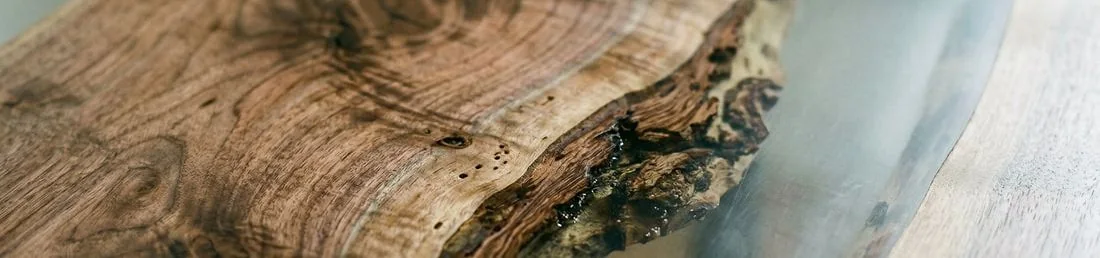
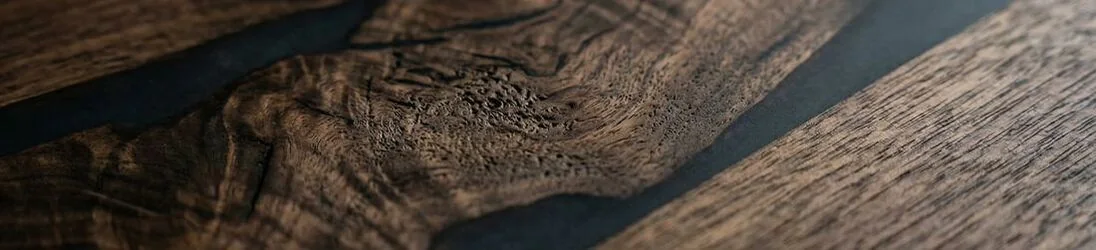
Walnut is the go-to wood for epoxy dining tables, and for good reason. It offers a rich, dark tone and natural variation that pairs beautifully with both clear and colored epoxy.
Pros:
-
Deep, warm color (natural browns and chocolate tones)
-
Beautiful grain patterns with natural movement
-
Works exceptionally well with clear or black epoxy
-
Hides wear and minor scratches better than lighter woods
Considerations:
-
Higher price point
-
Limited availability in very large slabs
Best For:
-
Modern and high-end interiors
-
Statement epoxy dining room tables
-
Clients who want a deep, warm, timeless look
See examples of the range in tables I’ve built. Design inspiration reference: Dezeen
Elm Epoxy Dining Tables
Why Elm Is a Unique and Underrated Choice
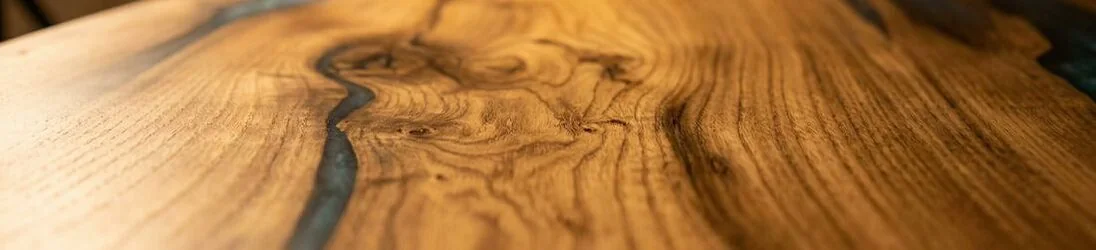
Elm is one of the most visually interesting woods used in custom epoxy dining tables. It features flowing, interlocked grain patterns and a warm tone that sits between walnut and maple.
Pros:
-
Distinctive, wild grain patterns with lots of character
-
Warm, natural color that works with many interiors
-
Often available in wide, expressive slabs
-
Creates highly unique, one-of-a-kind tables
Considerations:
-
Less consistent grain than maple (more variation)
-
Can require more careful finishing due to grain structure
-
Not as commonly understood by buyers (education helps here)
Best For:
-
Clients who want a one-of-a-kind statement table
-
Organic, natural, or rustic-modern interiors
-
Live edge wood epoxy dining tables with strong character
Learn more about design styles in my guide: Live Edge vs Straight Edge Tables: Which Style Fits Your Home
Learn more about wood behavior and characteristics: American Hardwood Export Council
Maple Epoxy Dining Tables
Why Maple Offers a Clean, Modern Look
Maple is one of the hardest domestic hardwoods and provides a smooth, uniform appearance. It’s often used in epoxy resin dining tables where a clean, understated aesthetic is desired.
Pros:
-
Extremely hard and durable
-
Light, neutral color
-
Smooth grain for a refined finish
-
Great for subtle epoxy designs
Considerations:
-
Minimal grain variation (less “character”)
-
Shows dents and wear more easily than walnut
-
Can feel too plain for bold statement pieces
Best For:
-
Contemporary or minimalist designs
-
Smaller epoxy kitchen tables
-
Subtle, clean aesthetics
Not sure which finish pairs best with maple? Read: Finishing Your Epoxy Table: From Hard Wax Oils to 2K Conversion Varnishes
Industry craftsmanship reference: Fine Woodworking
Walnut vs Elm vs Maple at a Glance
| Feature | Color | Grain | Durability | Style | Best Use |
|---|---|---|---|---|---|
| Walnut | Dark, rich | Bold and varies | High | Luxury and refined | Dining room centerpiece |
| Elm | Warm, medium tone | Wild, flowing, yet modern and clean | Moderate to high | Organic/artistic | Unique statement tables |
| Maple | Very light with knotty inclusions | Smooth, subtle yet rustic | Very high | Clean/minimal with a rustic tilt | Subtle and rustic designs |
Which Wood Is Best for Your Epoxy Dining Table?
The “best” wood depends on how you want your table to look and function.
Choose walnut if you want:
-
A bold, high-end centerpiece
-
Strong contrast with epoxy
-
A timeless design
Choose elm if you want:
-
A highly unique, organic look
-
Natural movement and grain character
-
A one-of-a-kind statement piece
Choose maple if you want:
-
A clean, minimal, and slightly rustic design
-
A subtle epoxy integration
-
A bright, neutral tone
Helpful sizing guide: What size dining table do I need?
How I Help You Choose
Selecting wood comes down to the individual slab as much as the species. I work through these with each client:
-
Slab selection based on grain and character
-
Epoxy pairing (color, clarity, placement)
-
Design proportions and layout
-
Finish selection for long-term durability
Explore my work here: custom dining tables I’ve built. Or learn more about table construction and materials in my blog: the Robert Russell Designs blog.
Final Thoughts
A custom epoxy dining table is only as good as the materials behind it. While epoxy adds visual impact, the wood determines how the table feels, performs, and ages over time. Choosing between walnut, elm, and maple isn’t about right or wrong. It’s about finding the material that fits your space, your lifestyle, and how you want your table to be experienced every day.
Ready to Design Your Table?
If you’re considering a wood epoxy dining table, start with the slabs. Begin a commission, and I’ll draw your table from the actual boards before anything is cut.